
Medical IV Therapy and Scottsdale Drip Bars: What Changes When a Physician Writes the Order

The difference is who decides what goes in the bag and what gets checked first. At a drip bar you pick a menu item.
In a medical setting, a licensed physician reviews your history, orders labs where they matter, and writes the formula for your situation. That screening step is not a formality. High dose vitamin C in particular should not be given before G6PD status is known, and almost nobody asks.
Why Scottsdale Has So Many IV Drip Bars
Scottsdale has one of the densest IV markets in the country. Lounges in Old Town, mobile services that meet you at your house or your hotel, add on bags at med spas, concierge vans at golf tournaments. January and February push it harder, because event season starts and everyone wants to feel sharp.
I am not here to tell you every one of those is bad. Some are run carefully. For a basically healthy person who wants fluids and a vitamin blend after a long week, a lounge bag is a reasonable thing to buy.
The problem is that the model is built around speed. You choose from a board, you sit for forty minutes, you leave. Nothing in that sequence is designed to find out whether the thing you chose is right for your body, because nobody in the room is set up to answer that question.
Drip Bar vs Medical IV Therapy: What You Are Actually Buying
A lounge sells access and convenience. The menu is standardised, the names are catchy, and the pricing is per bag. Staffing is usually a nurse working from a standing order written for the general public rather than for you.
A medical IV is a treatment decision. Somebody with prescriptive authority looks at your chart, decides whether an IV is even the right route, picks the components and the doses, and takes responsibility for what happens next. In Arizona, naturopathic physicians are licensed to do exactly that, which is why advanced IV therapy sits inside our clinical work rather than on a menu board.
The honest way to put it is that one is a product and the other is care. They can look nearly identical from the outside, because both involve a chair and a line.
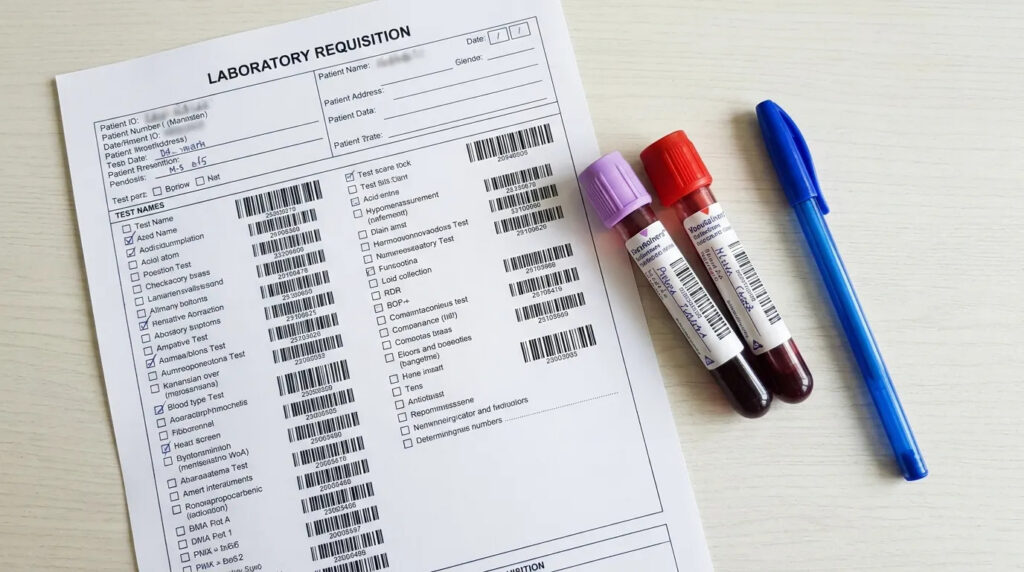
What Lab Testing Should Happen Before an IV Drip
This is the part that matters most, so let me be specific…
Why G6PD Testing Matters Before a High Dose Vitamin C IV
G6PD is an enzyme that helps red blood cells handle oxidative stress. Some people are born with low levels of it. Most of them never find out, because nothing in ordinary life stresses the system enough to cause a problem.
High dose vitamin C is not ordinary life. In someone with G6PD deficiency, it can cause red blood cells to break down. This is a known and well documented interaction, which is why high dose vitamin C protocols in a clinical setting include a G6PD test first.
Ask yourself whether anyone drew your blood before selling you a vitamin C bag. If the answer is no, you were not screened. That is the whole point.
Kidney and Heart Checks Before IV Fluid Therapy
An IV is a volume of fluid delivered straight into your circulation. If your kidneys are not clearing well, or your heart does not handle extra volume comfortably, that matters.
Most healthy people absorb a litre without noticing. Some people do not, and the ones who do not are rarely the ones who know in advance. A basic metabolic panel answers this and takes one draw.
Medication Interactions With IV Therapy Ingredients
Some components interact with prescriptions. Some are a poor idea in specific conditions. Patients with complex or chronic conditions are the group most likely to walk into a lounge looking for relief and the group most likely to react badly, because their systems are already reactive.
Mast cell patients can react to additives and preservatives. People with dysautonomia respond unpredictably to rapid fluid shifts. Neither question comes up when you are choosing between the Immunity bag and the Recovery bag.
What Changes When a Physician Orders Your IV Therapy
Three things change, and they all show up in the result.
A Custom IV Formula Instead of a Menu Item
Instead of a named blend, the components are selected for what your labs and your history actually show. Doses are adjusted. Something gets left out because of an interaction. Something gets added because a panel showed a genuine deficiency rather than a guess.
We also decide whether you need an IV at all. Plenty of people come in asking for one and leave with an oral protocol, because absorption was never their problem. That conversation does not happen when the business model depends on selling bags.
Why Infusion Rate Is a Clinical Decision
How fast something goes in changes how it is tolerated. Push magnesium too quickly and people feel awful. Run high dose vitamin C too fast and you get a different set of problems. Rate is a clinical decision that depends on the person in the chair.

How Medical IV Therapy Fits Into a Treatment Plan
This is the real difference. A bag on its own is an event. A bag inside a plan is a step. If we are working on gut function or hormones, the IV supports that work and gets adjusted as the labs move.
Patients who come to us after a year of lounge visits usually describe the same thing. They felt good for a day each time, and nothing underneath ever changed. That is what buying a product rather than treating a cause tends to feel like.
What Is in a Medical IV Drip and How Often You Need One
People reasonably want to know what a medical IV actually contains and how many they will need.
Common IV Therapy Ingredients and Doses
There is no single formula. Common building blocks include magnesium, B vitamins including B12, vitamin C at various doses, calcium, trace minerals and amino acids. Glutathione is often given separately rather than mixed in.
What varies is the proportion and the dose, and that is the entire point. Somebody with a confirmed B12 deficiency and poor absorption needs something quite different from somebody recovering from a long viral illness. The names on a lounge menu suggest precision that the underlying bags usually do not have.
How Many IV Therapy Sessions You Actually Need
For a specific deficiency, the course is often short and then stops, because once the level is corrected the job is done. Repeating indefinitely at that point is spending money on a problem you already solved.
For supportive use inside a longer protocol, spacing is usually wider and the frequency drops as other things improve. We would rather taper you off than keep you on a standing weekly appointment.
If a provider cannot tell you roughly how many sessions they expect and what would make them stop, that is worth noticing. Open ended is good for the business and rarely good for the patient.
What an IV Therapy Session Feels Like
Most people sit for forty five minutes to an hour and a half depending on what is running and how fast. Magnesium often makes people feel warm or slightly heavy, which is normal. A metallic taste during a push is common and harmless.
Afterwards, most people feel fine. Some feel tired for a few hours. In the dry air here, hydration before you arrive makes a noticeable difference to how the line runs and how you feel afterwards, which is advice we give every patient and which most people ignore until they try it once.

Questions to Ask Before Booking IV Therapy in Scottsdale
Take these to any provider, us included.
Who wrote the order for what is going in this bag, and are they licensed to prescribe. What did you check before deciding this was appropriate for me. Do you test G6PD before high dose vitamin C. What happens if I react, and who is here to manage it. How does this connect to anything else going on with my health.
A good provider answers all five without getting defensive. A provider who treats those questions as an inconvenience is telling you what kind of operation you have walked into.
Choosing IV Therapy in Scottsdale Without Guessing
Here is what I would want a friend to understand. The decision is not which IV to buy. It is whether an IV is the right tool for what is actually wrong, and nobody can answer that without looking at you properly first. If you are tired, foggy, run down, or just not recovering the way you used to, that deserves a workup rather than a menu. Sometimes the answer really is an IV. Often it is something underneath that no bag was ever going to fix, and finding it is the cheaper path in the end.
Book a 90 minute consultation. We will go through your history, order what needs ordering, and tell you honestly whether IV therapy belongs in your plan. Call 602-345-1605 or book your visit here.

