
Spending HSA and FSA Dollars on Naturopathic Care in Scottsdale Before December 31

FSA funds generally expire on December 31, while HSA funds roll over indefinitely. Naturopathic physician visits are typically eligible medical expenses when care is for a diagnosis or treatment, and we provide the documentation you submit.
If you have FSA money sitting unspent, the deadline is the one genuinely time sensitive thing in this article. Your plan may allow a grace period or a small carryover, so check your plan documents before assuming either way.
The Two Accounts Behave Completely Differently
People use the terms interchangeably and then make decisions based on the wrong one, so let us separate them.
An FSA is use it or lose it. Money goes in pre tax through your employer, and whatever is left at the end of the plan year generally disappears. Some employers allow a grace period into the following March, and some allow a limited carryover amount. Which one you have, if either, is written in your plan documents and nowhere else.
An HSA pairs with a high deductible plan, the money is yours permanently, it rolls over every year, and it travels with you when you change jobs. There is no December deadline on an HSA. If you have one, the pressure you are feeling about year end is probably misplaced.
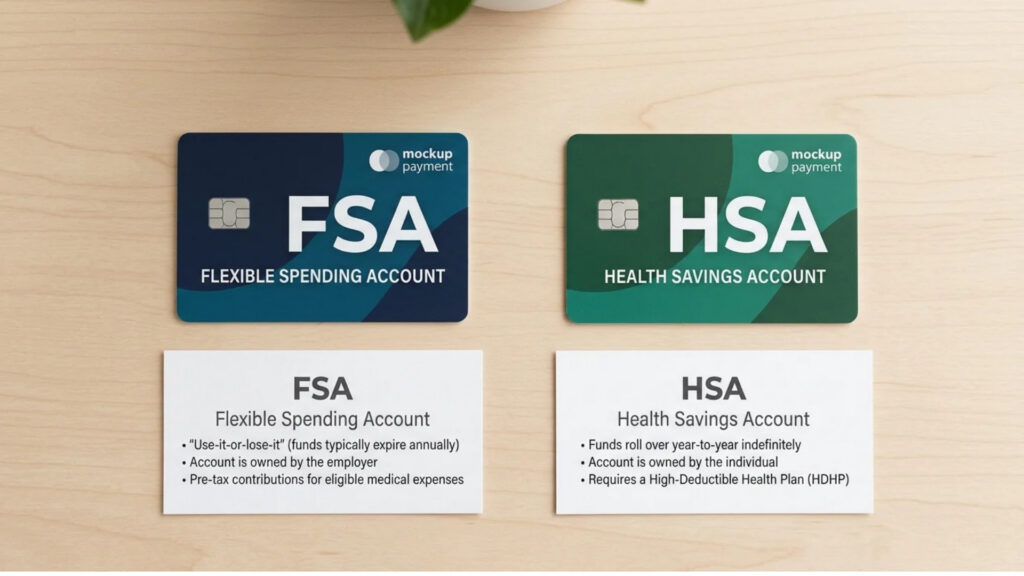
So the first thing to do is find out which you actually have, and if it is an FSA, what your balance is and what your plan year end date is. Many plan years follow the calendar year. Not all do.
Where naturopathic care fits
Expenses for diagnosis, treatment, mitigation or prevention of disease are generally eligible. Care delivered by a licensed physician falls inside that. Arizona licenses naturopathic physicians as medical providers, so a visit here is a visit to a licensed physician, which is the distinction that matters when an administrator reviews a claim.
Lab work ordered as part of diagnosis is usually eligible as well. Supplements are the grey area. Items bought for general wellbeing are usually excluded, while something recommended to treat a specific diagnosed condition may qualify with a letter of medical necessity. Plan administrators vary in how they handle this, so the honest answer is that it depends on your administrator.
What We At Empower Integrative Health Issue, and What You Do With It
We are a private pay practice. We do not bill insurance, and we are clear about that from the first phone call. The follow on question is always about what you can recover, so here is how it works mechanically.
The superbill
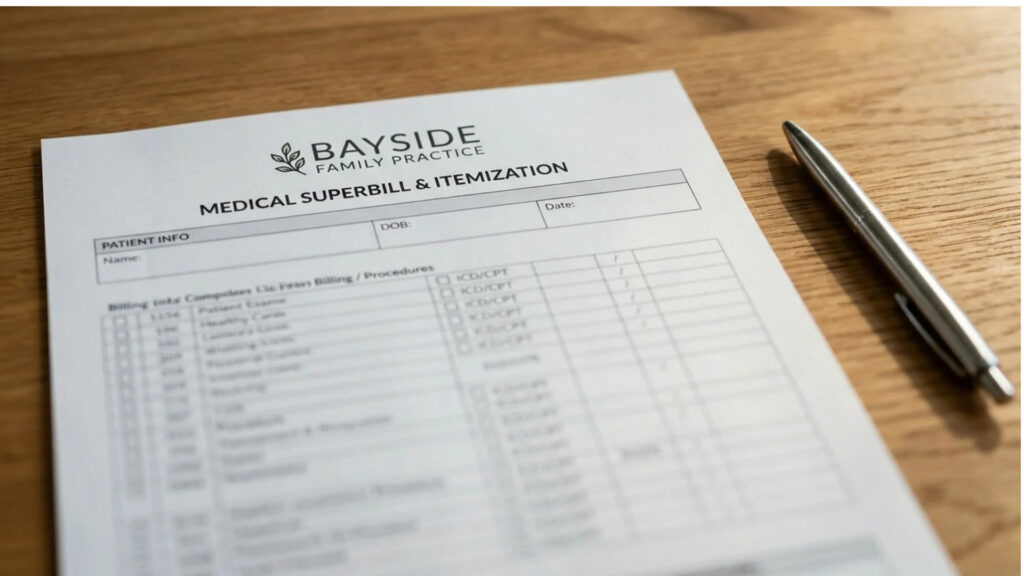
After your visit we (can) provide a superbill. It is an itemised receipt carrying the clinical detail an administrator needs: date of service, provider credentials, diagnosis codes and procedure codes. You submit it to your FSA or HSA administrator, or to your insurer for out of network reimbursement if your plan has that benefit.
Most FSA and HSA administrators will accept a superbill as substantiation. Many patients also just pay with the account debit card directly and keep the superbill in case documentation is requested later.
If you want the fuller picture of how the private pay model works here, we have written about what private pay really means for patients in Arizona, including the out of network side.
Labs are often the bigger line
This surprises people. Most of the standard lab work we order can run through your insurance in the usual way, because it goes to a conventional laboratory on a physician order. Specialty functional panels, the DUTCH hormone testing and comprehensive stool and mycotoxin work, generally do not, and those are frequently eligible for HSA or FSA payment.
That split is worth understanding before you plan the spend, because it changes which part of your care your account money is best pointed at.
What usually does not qualify
Worth knowing so you do not budget around something that gets rejected.
General wellness purchases are typically out. A multivitamin you take because it seems sensible, a gym membership(this can be covered by HSA sometimes), a wellness retreat. The line administrators tend to draw is between maintaining general health and treating an identified condition.
Supplements sit right on that line. Something recommended for a diagnosed condition may be eligible with a letter of medical necessity, and may still be questioned. Something you picked up because it looked good is not.
Cosmetic treatments are generally excluded. Our aesthetic services are a cash pay category and you should plan for them that way rather than expecting account funds to cover them.
And a practical note that catches people out. Keep every receipt and superbill even when you pay by account debit card. Administrators request substantiation months later, and a claim you cannot document can be reversed against your account.
If you have an HSA, play a longer game
The December pressure genuinely does not apply to you, which opens up a better option.
Because HSA funds roll over and can be invested, some people pay smaller medical expenses out of pocket, keep the receipts, and let the account grow. You can reimburse yourself for a qualified expense later, including years later, as long as the expense happened after the account was opened and you kept the documentation.
That turns your HSA into something closer to a long term medical fund than a yearly spending account. For patients starting a longer arc of care, it is worth a conversation with whoever handles your finances before you decide how to pay for the first year.
Sequencing December and January
Here is the part that is specific to the calendar rather than to the rules.
Splitting across two plan years
Our standard start is a 90 minute initial consultation, then a second 90 minute visit to review results and build the plan. Those two appointments naturally sit a few weeks apart because labs take time to come back.
If your intake lands in December and your review lands in January, the spend splits across two plan years on its own. December uses this year’s FSA balance before it expires. January draws on next year’s funds, which reset on the first. You do not have to engineer this. You just have to start early enough that it happens.

Start in late December and both visits land in January, which is fine if you have an HSA and less useful if you are trying to clear an FSA balance.
Why December books out
We run clinical days Monday, Wednesday and Thursday, with Tuesdays reserved for procedures and Fridays closed. That is a genuinely limited number of 90 minute slots in a month that already has holidays in it. Every year the last two weeks of December fill first, largely with people in exactly this situation. If you are working to a December 31 deadline, calling in the first half of the month gives you options that calling on the twentieth will not.
What about next year’s deductible
Worth holding in the same frame. On January 1 most plans reset, which means anything that runs through your insurance starts from zero again.
That matters for the lab side specifically. If you have already met this year’s deductible, standard lab work ordered in December may cost you considerably less than the same panels ordered in January. If you are nowhere near meeting it, the reverse logic applies and there is no advantage to rushing.
So the honest answer depends on where you sit. Check your deductible status alongside your FSA balance before you decide which side of the new year to put the lab work on. It is a five minute look at your insurer’s portal and it occasionally changes the plan.
4 things to check this week
Find out whether you have an FSA or an HSA. Look up your current balance. Check your plan documents for a grace period or carryover, and while you are in there, check where you stand against this year’s deductible. Then call us and we will tell you what we can document for the visits you are considering.
Do Not Let It Evaporate
Unspent FSA money does not come back to you. It goes back to your employer. For a lot of people it quietly disappears every year while they intend to do something about the fatigue, the gut, the hormones, the thing they have been managing around. If you were going to start this work in the new year anyway, starting it three weeks earlier costs you nothing and may be funded by money you have already set aside and will otherwise forfeit.
Book a 90 minute consultation. Tell our team you are working to a December deadline and we will tell you what documentation we can provide and which slots remain. Call 602-345-1605 or schedule your appointment.
This article is general information, not tax advice. Eligibility depends on your specific plan and administrator, so confirm with them or with a tax professional before you rely on it.

