

You’ve been doing everything right. Cutting the carbs, showing up to the gym, drinking all the water. And still, the scale just sits there like it’s mocking you. Before you blame your willpower, take a breath.
Weight loss resistance, that frustrating wall where nothing seems to work, is almost always a sign that something deeper is going on inside your body. It’s rarely about discipline.
At Empower Integrative Health, we see this every single week. And it almost always traces back to two things: your hormones and your gut.
Why Your Hormones May Be Blocking Weight Loss
Your hormones are your body’s internal operating system. They control your metabolism, your hunger, how your body stores fat, and critically, whether it even wants to burn it. When that system is off, even slightly, no amount of salad or spin class is going to move the needle in any meaningful way.
The hormonal imbalances that affect weight aren’t always dramatic. You won’t necessarily have hot flashes or obvious cycle changes. Sometimes it’s subtle. A little more fatigue than usual. Belly fat that wasn’t there two years ago. An afternoon sugar craving that hits like clockwork. Those are quiet signals worth paying real attention to.
The Cortisol-Belly Fat Connection Nobody Talks About

Cortisol is your stress hormone, and it’s also a major fat storage trigger. When your body senses stress (and that includes work pressure, poor sleep, emotional overload, or even under-eating), cortisol levels spike. Your body reads this as a survival situation and responds by hoarding fat, especially around your midsection. It’s not being stubborn. It’s doing exactly what it evolved to do.
Here in Scottsdale, where the pace runs fast, the heat adds its own physiological load, and many people are pushing through packed schedules, a lot of patients are walking around with chronically elevated cortisol and genuinely don’t know it.
We see it in people who exercise hard, skip meals, work long hours, and can’t understand why their body holds onto weight. It’s the cortisol. And testing your cortisol rhythm throughout the day, not just a single snapshot, often reveals exactly what’s been silently blocking progress.
How an Underperforming Thyroid Slows Everything Down
Your thyroid is the master regulator of your metabolism. When it’s underperforming…With hypothyroidism, or its autoimmune cousin Hashimoto’s, your body burns fewer calories at rest, you feel sluggish, and weight loss becomes almost physiologically impossible, no matter how hard you try.
But a standard TSH test often won’t catch it. A “normal” TSH can completely mask low Free T3 (the active, usable form of thyroid hormone), elevated thyroid antibodies, or a poor conversion of T4 into T3.
That conversion, by the way, happens partly in your gut, which is why gut health and thyroid function are far more connected than most people realize. A complete thyroid panel, TSH, Free T3, Free T4, Reverse T3, and antibodies, tells a very different story than a single number on a standard lab sheet.
Estrogen Dominance and Insulin Resistance: The Double Hit
Estrogen dominance happens when estrogen is elevated relative to progesterone, and it’s far more common than most conventional doctors acknowledge. It leads to water retention, bloating, fat storage in the hips and thighs, mood instability, and intense PMS. And it regularly goes completely undetected on standard bloodwork because most providers never test progesterone or the full estrogen metabolite picture.
Pair that with insulin resistance, where your cells stop responding to insulin efficiently, pushing your body to store fat rather than burn it, and you’ve got a situation where weight loss is genuinely, biochemically difficult.
Not because you lack discipline. Because your hormones are actively working against you. The fix isn’t a stricter diet. It’s identifying what’s out of balance and addressing it at the root, with testing that actually looks for the right things.
Up to 80% of women experience hormone imbalances by age 40, according to the American College of Obstetricians and Gynecologists, and many of them never receive a formal diagnosis. You are not imagining this.
The Gut-Weight Connection Most Doctors Completely Miss
Even if your hormones look relatively balanced, your gut might be the silent saboteur nobody’s thought to check. Your gut microbiome, the trillions of bacteria living in your digestive tract, does far more than just digest food. It regulates systemic inflammation, communicates directly with your brain via the gut-brain axis, influences how you absorb nutrients, and plays a direct role in how your hormones are processed and cleared.
When the microbiome is disrupted, a state called dysbiosis, weight loss can stall completely, even when you’re doing everything else right. At Empower Integrative Health’s GI practice, we dig into this deeply, especially for patients who feel like they’ve genuinely tried everything and still can’t move forward.
The Estrobolome: Your Gut’s Hidden Role in Estrogen and Weight
There’s a collection of gut bacteria called the estrobolome that helps your body process and eliminate estrogen. When these bacteria are out of balance, estrogen doesn’t exit cleanly; instead, it gets reabsorbed back into your bloodstream. This directly drives estrogen dominance, which, as we covered above, promotes fat storage, causes bloating, and makes weight loss significantly harder.
It’s a loop that most conventional providers never test for. But it explains why some people feel chronically puffy, carry weight despite genuinely clean eating, and cycle through the same frustrating hormonal pattern month after month without ever getting a real answer.
SIBO, Leaky Gut, and the Inflammation That Keeps You Stuck
Small Intestinal Bacterial Overgrowth — SIBO — happens when bacteria that belong in your large intestine migrate into your small intestine. The result is bloating, gas, nutrient malabsorption, and a chronic, low-grade inflammatory state that most people don’t even connect to their weight.
That inflammation matters because it directly activates cortisol. And cortisol, as we discussed, triggers fat storage. Suddenly, you’re in a cycle where inflammation drives cortisol, cortisol drives fat storage, and no calorie deficit in the world can break it.
When the intestinal lining becomes permeable and allows undigested particles into the bloodstream, it creates a similar cascade. These aren’t fringe diagnoses. They’re genuinely common, genuinely underdiagnosed, and genuinely treatable with the right functional testing.
The Food Sensitivity Blind Spot
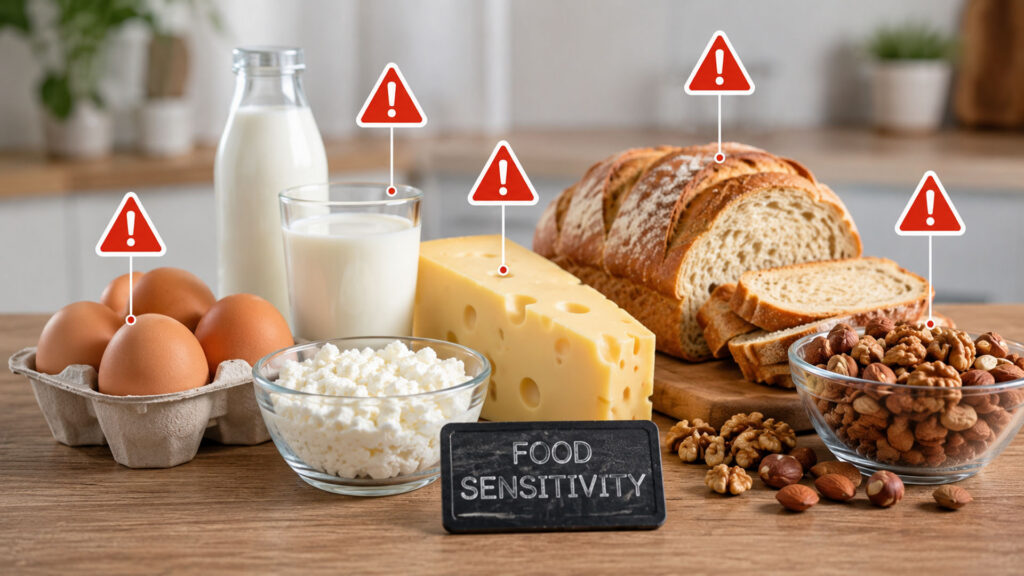
Not every food reaction is immediate or obvious. IgG-mediated food sensitivities are delayed immune responses, sometimes triggering 24 to 72 hours after eating the offending food. No hives, no obvious reaction. Just persistent fatigue, bloating, joint aches, brain fog… and a metabolism that seems stuck.
The frustrating part is that these are often healthy foods. Eggs at breakfast. Greek yogurt for protein. Whole wheat bread or almond milk. If your immune system is quietly mounting a low-grade response to these foods every single day, the resulting inflammation will perpetuate weight loss resistance, and no amount of clean eating will fix what’s still quietly inflaming your system.
A comprehensive IgG food panel isn’t about creating fear around food. It’s about getting actual information your body’s been trying to communicate in the only way it knows how.
That’s why good digestion is crucial for having a healthy body and maintaining weight.
What Weight Loss Resistance Actually Looks Like in Real Life
Let’s make this concrete. The patients who arrive at Empower Integrative Health after years of frustrating, failed weight loss efforts often share a recognizable pattern. They’ve cycled through multiple diets, things work briefly, then stop. They exercise consistently but see diminishing returns over time. They feel tired even after sleeping. They carry weight primarily in their midsection, hips, or thighs. They deal with some combination of bloating, afternoon crashes, poor mood, or stubborn brain fog. And their conventional labs came back completely “normal”.
If that sounds familiar, that’s nothing wrong. That’s the right things not yet being tested.
What to Do If You Suspect Hormones or Gut Health Are Blocking Weight Loss
If you’ve been doing all the “right” things and still not seeing results, the answer usually isn’t eating less or exercising harder. It’s getting clarity on what your body actually needs.
The first step is proper testing. Instead of relying only on basic labs, functional testing can uncover hidden issues like cortisol dysregulation, insulin resistance, thyroid conversion problems, gut infections, inflammation, or food sensitivities. These are common root causes that standard checkups often miss.
The second step is reducing stress on your body. That may mean improving sleep quality, eating enough protein, balancing blood sugar, walking instead of overtraining, and supporting digestion with simple habits like slower meals and hydration.
The third step is personalized treatment. Some people need thyroid support. Others need gut healing protocols, hormone balancing, or nutrition changes based on their unique biology. There is no one-size-fits-all plan.
At Empower Integrative Health, we focus on identifying why your body is resisting weight loss instead of blaming you for it. When the root cause is addressed, weight loss often becomes easier, more natural, and sustainable.
If your body feels stuck, it may not be broken. It may just need the right support.
Your Body Is Asking for Help
Hormone imbalances, gut dysfunction, inflammation, and hidden metabolic stress can all create real barriers that make weight loss feel impossible. You don’t need another extreme diet or punishing workout plan. You need answers tailored to your body.
Dr. MaryK Geyer helps patients uncover the deeper reasons behind weight loss resistance through advanced testing and personalized care plans that support hormones, digestion, and long-term wellness.If you’re tired of guessing and ready to understand what’s truly holding you back, schedule a consultation with me today. Together, we’ll create a plan that helps your body work with you.

