

EBOO candidacy is decided by bloodwork, not by interest. Before anyone starts a series with us, we look at red cell health, iron status, kidney and liver function, clotting markers and your full medication list.
Some people are cleared quickly. Others need two or three things corrected first, and a few should not do it at all. If nobody has asked for those labs, you have not been screened yet. You have been sold a package.
What EBOO Actually Does, and Why Candidacy Is the Whole Question
EBOO stands for extracorporeal blood ozonation and oxygenation. Blood is drawn continuously, passed through a filter and an ozone and oxygen exchange, and returned. It is a circuit, not an injection. That one structural fact drives everything else about who should and should not do it.
Because it is a circuit, the volume of blood involved is far larger than a standard ozone treatment. That is the appeal. It is also the reason your blood needs to be in reasonable shape before you start. Anything that affects how your red cells handle oxidative stress, how well your kidneys clear what gets mobilised, or how your blood clots, becomes relevant in a way it simply is not for a vitamin drip.
Here is what I keep running into. Someone reads about EBOO, decides it sounds like the thing that finally moves the needle on their fatigue, and starts calling around for price. Price is the wrong first question. The first question is whether your body is currently set up to get anything out of it.
The difference between an ozone add on and a medical procedure
Around the valley, ozone gets sold as a line item. You book a drip, you add ozone, you pay the upcharge. Nobody draws labs because nobody is treating anything specific. You walk in, you walk out, and the only thing anyone evaluated was your card.
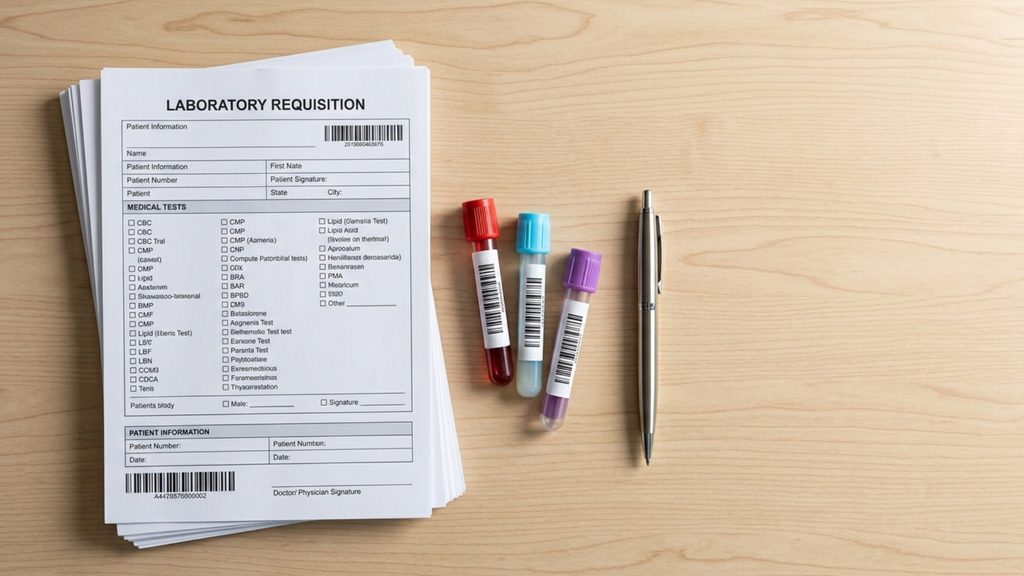
That model works fine for things with almost no physiological demand. EBOO is not one of those things. It belongs in the same mental category as a procedure, which means someone with prescriptive authority should be looking at your chart before, during and after. In Arizona, naturopathic physicians are licensed to do exactly that, which is why we treat it as a clinical decision rather than a menu item on our specialized therapies list.
The Candidacy Checklist We Work Through First
None of this is meant to talk you out of it. Most of the people who ask us about EBOO are reasonable candidates eventually. The question is whether they are candidates today, and what has to happen between now and then.
What your bloodwork needs to show
We start with a complete blood count, because red cell health is central here. Anemia of any kind changes the calculation. So does a hemoglobin that looks fine on paper while ferritin sits on the floor, which is extremely common in women who have been told for years that their labs are normal.
We check G6PD status. This is an enzyme deficiency that affects how red blood cells handle oxidative stress, and it is the single clearest reason to not proceed. It is a simple test. It is also one almost nobody runs before selling an oxidative therapy, which tells you something about how the local market operates.
Kidney and liver function matter because anything you mobilise has to leave through those organs. If your clearance pathways are sluggish, you can feel considerably worse after a session, and people usually read that as the treatment failing rather than the sequence being wrong.
We review clotting status and anything you take that affects it. We also go through your full medication and supplement list, prescriptions included, because interactions here are not theoretical.
Who we usually slow down, and who we redirect
Some patterns come up often enough to name.
If you have significant mast cell reactivity, we go slowly or not at all. People with active MCAS can react to the circuit itself, and a reaction mid session is not a small inconvenience. Our complex care patients with mast cell involvement usually need other groundwork first.
If you have dysautonomia or POTS, the volume shifts involved deserve real caution, particularly in a climate where most people are mildly dehydrated anyway.

If you are mid flare with an autoimmune condition, timing matters. Sometimes we wait. Sometimes we treat the flare first and revisit.
And if you came to us specifically for mold or chronic infection work, EBOO is rarely the opening move. Drainage and binding pathways usually come first, for the same reason you do not start demolition before the skip arrives.
What a session actually involves
People ask about this less often than they should, so here is the shape of it. You sit in a chair with access in both arms. Blood leaves through one line, passes through the filter and the gas exchange, and returns through the other. A session runs somewhere in the range of an hour to an hour and a half at most depending on the protocol and how you are tolerating it on the day.
You are monitored throughout. Blood pressure, how you feel, whether anything needs slowing down or stopping. Most people read, work or doze. Some feel tired afterwards, some feel noticeably clearer, and honestly neither reaction on day one tells you much about where you end up after a full course.
Hydration before and after matters more here than it would almost anywhere else, because you are starting from a drier baseline than you think. We give specific guidance on that rather than the usual advice to drink plenty of water, since plain water without minerals is not what your body is actually asking for after a session like this.
A course is several sessions rather than one, spaced to let your system catch up in between. How many depends on what we are working on and how you respond, which is another reason the screening visit comes first. Anyone quoting you a package count before they have seen a single lab value is pricing a product, not planning treatment.
What we track between sessions
We recheck markers as we go rather than running labs once at the start and never again. Red cell indices, inflammatory markers and whatever was relevant to your original picture. If something moves in the wrong direction, we want to know in week three, not at the end.
This is also where people find out whether it is working. Not from how one session felt, but from the pattern across several, read against what your labs are doing. That takes a clinician who is still looking.
Why Timing Matters More Here Than Almost Anywhere Else
EBOO is not a single appointment. It is a series, and a series needs runway.

That collides with something particular about North Scottsdale. A large share of the people asking us about this are here from roughly October to April. They arrive, settle in, spend a few weeks adjusting, start researching in December or January, and by the time they call it is February. A series started in February is a series interrupted in April.
Working backwards from your departure date
So we work backwards. If you leave in April, the intake needs to happen with enough room for screening labs to come back, for anything they flag to get corrected, and for the series itself to run with sensible spacing. That is not a scare tactic, it is arithmetic.
There is a second wrinkle worth knowing. Our virtual visits are available to Arizona residents. If you spend half the year here but are not an Arizona resident, the follow up portion of your care looks different once you fly home, and we would rather say that at the start than discover it in April.
If you live here year round
Then you have the luxury of sequencing properly. We can correct the iron, open the clearance pathways, deal with the gut piece if there is one, and run the series when your body will actually use it. That is a better outcome and usually a cheaper one, because nothing gets repeated.
So Where Does That Leave You
Probably with a short list of things nobody has tested yet. That is the normal place to land after reading this, and it is a good place, because it is answerable. A complete blood count, iron studies, G6PD, kidney and liver panels and an honest medication review will tell you more about whether EBOO is worth your money than any amount of further reading will. We run those as part of the first visit, and we tell you plainly if the answer is no.
Book a 90 minute consultation. We will go through your history, order the screening labs, and give you a straight answer on whether EBOO fits your situation or whether something else should come first. Call 602-345-1605 or book your visit here.

