
Persistent Digestive Problems? When Bloating, Gas, Constipation or IBS Symptoms Signal a Deeper Imbalance

You wake up uncomfortable before food or coffee.
Your stomach feels tight. Puffy. Almost swollen. And you’re already doing the mental math: What did I eat yesterday? What do I avoid today? Will my pants fit by noon?
If this sounds familiar, especially in Scottsdale, you’re not alone. Many women here try low FODMAP, probiotics, cutting gluten, dairy, and sugar, sometimes joy, yet bloating, gas, constipation, or diarrhea still refuse to leave.
What makes it worse is the feeling of being brushed off.
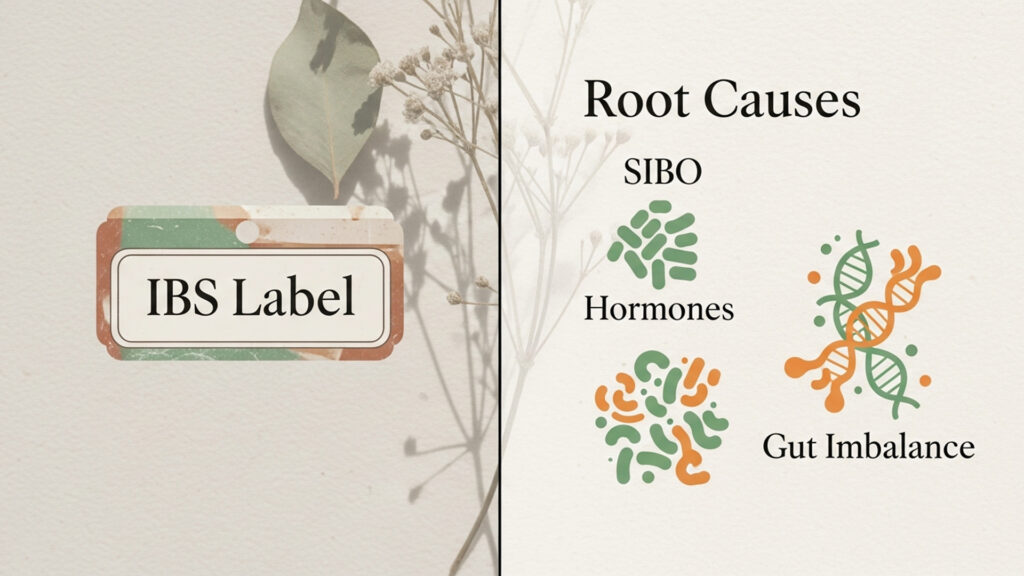
Being told “it’s just IBS” after explaining how much it affects your life can feel dismissive. IBS is a label, not a root cause, and long-lasting symptoms often mean something deeper is going on. When you stop chasing symptom control and start asking why your gut is struggling in the first place, real healing becomes possible.
Let’s talk about why your symptoms may be sticking around and what might actually be driving them.
Why Conventional IBS Treatment Falls Short
Most women with persistent IBS symptoms aren’t failing treatment. The treatment is failing them.
IBS simply means you have ongoing digestive symptoms that fit into a certain category without anything dangerous showing up on basic tests.
Once you get that label, the goal often becomes symptom control, not healing.
Common IBS Treatments You’ve Probably Tried
- Antispasmodic medications for cramping
- Fiber supplements (even when fiber makes things worse)
- Laxatives for constipation
- Anti-diarrheal medications
- Low-dose antidepressants to dull gut sensitivity
Some of these help temporarily. But they don’t explain why your gut is reacting in the first place.
Why Symptoms Keep Coming Back
Its symptoms flare, and medications get adjusted. Diets get stricter, and life gets smaller.
Research shows up to 75% of IBS patients still have symptoms despite conventional treatment.
Not because they’re doing something wrong, but they don’t know that suppressing symptoms doesn’t fix the imbalance causing them.
Why Your Digestive Issues Persist: 4 Key Root Causes of IBS
A diagnosis tells you what your symptoms look like. Root cause medicine asks why they’re happening.
IBS doesn’t mean your gut is broken. It usually means something is interfering with how it’s supposed to work.
Which brings us to its hidden root causes.
Hidden Root Cause #1: SIBO (Small Intestinal Bacterial Overgrowth)
Here’s a pattern many women recognize instantly.
You wake up feeling mostly okay. Then you eat, and an hour later, your stomach feels inflated, gassy, tight, and uncomfortable. That’s often SIBO.
What SIBO Actually Is
SIBO happens when bacteria that belong in the large intestine move into the small intestine. The small intestine isn’t designed to handle fermentation. So when bacteria ferment food there, gas builds quickly. That pressure causes bloating, pain, and distention.
Common SIBO Symptoms
- Bloating that worsens throughout the day
- Gas and visible abdominal distention
- Constipation, diarrhea, or both
- Symptoms after carbs, fiber, or “healthy” foods
- Increasing food intolerances
Why SIBO Is Missed
Colonoscopies don’t detect it, and routine blood work doesn’t flag it. So women are told everything looks “normal” even when they feel anything.
The IBS–SIBO Connection
Studies suggest 60–80% of IBS patients may actually have SIBO. That’s significant. And hopeful.
SIBO is testable with a breath test and treatable with targeted protocols.
At Empower Integrative Health, Dr. Geyer uses comprehensive testing and personalized treatment plans that go beyond a one-size-fits-all antibiotic approach.
For many women, addressing SIBO is the first real turning point. But it’s not the only one.
Hidden Root Cause #2: Hormone Imbalances That Worsen IBS Symptoms in Women
Why Women Experience IBS Differently
Women are nearly twice as likely as men to be diagnosed with IBS. That’s not a coincidence.
Hormones play a major role in digestion, yet they’re rarely part of the IBS conversation.
How Hormones Affect Gut Function
Hormones influence:
- Gut motility (how fast food moves)
- Inflammation levels
- Gut lining integrity
- Nervous system signaling
When they’re off, digestion suffers.
Common Hormonal Triggers
1. Estrogen dominance
- Slows digestion
- Increases bloating and constipation
2. Low progesterone
- Raises inflammation
- Impacts gut barrier function
3. Thyroid dysfunction
- Directly affects digestive speed
4. High cortisol (stress hormones)
- Triggers IBS flares
- Disrupts gut-brain communication
Many women notice digestive issues starting or worsening during:
- Perimenopause
- Menopause
- High-stress life transitions
You may also notice symptoms worsening with your cycle, fatigue alongside digestive issues, and weight changes that don’t make sense.
Dr. Geyer’s Hormone Expertise
With over years in women’s health, Dr. Geyer takes a comprehensive hormone-first approach. Not just basic thyroid labs, but full hormone evaluation tied directly to gut health.
For many women, balancing hormones is the missing piece that finally allows the gut to heal.
Hidden Root Cause #3: Food Sensitivities & Chronic Inflammation
Food reactions aren’t always allergies. Many are delayed sensitivities that quietly fuel inflammation. That’s why guessing with elimination diets can feel exhausting and ineffective.
Common Hidden Triggers
- Dairy (even when lactose tests are normal)
- Eggs
- Soy
- Corn
- Nightshades
- High-histamine foods
- Certain FODMAPs
Inflammation Creates a Cycle
Ongoing food reactions irritate the gut lining. That irritation leads to increased permeability, which leads to more sensitivities. Breaking the cycle requires identifying triggers, not guessing.
Hidden Root Cause #4: Gut Dysbiosis & Microbiome Imbalance
Your digestive tract houses trillions of bacteria. They influence digestion, immunity, and even mood. When that balance is off, symptoms follow.
Signs of Dysbiosis
- Chronic bloating and gas
- Alternating constipation and diarrhea
- Sugar and carb cravings
- Frequent infections
- Brain fog with digestive issues
Why Probiotics Aren’t Enough
Not all probiotics work the same, and this is where things get confusing. Different strains do different jobs in the gut. Some calm inflammation. Others support motility. Some are helpful for certain infections, while others can actually make bloating worse if they’re not right for your situation.
Timing matters too. And so does what’s already living in your gut.
That’s why grabbing a generic probiotic off the shelf can feel like a gamble. Without testing, you’re guessing. Comprehensive stool testing helps take the guesswork out by showing what’s actually happening and what your gut truly needs to heal.
How Living in Scottsdale Impacts Gut Health & Dr. Geyer’s Root Cause Approach to IBS Symptoms

Scottsdale’s dry heat often leads to chronic dehydration that slows digestion and worsens constipation.
Add in a high-achieving and fast lifestyle, and stress hormones stay elevated. That stress directly affects gut function.
Frequent dining out, alcohol, and an active lifestyle increase nutritional demands and can amplify underlying imbalances.
A personalized approach matters here.
What Makes Empower Integrative Health Different
Healing starts with listening. Dr. Geyer begins with a consultation to understand your full health story.
Then, comprehensive testing may include
- SIBO breath testing
- Advanced stool analysis
- Food sensitivity panels
- Comprehensive hormone testing
- Nutrient deficiency testing
- Toxin and genetic testing when needed
Treatment plans are adjusted as your body responds, addressing multiple root causes at once. The goal isn’t lifelong management. It’s remission.
Your Next Steps Toward Healing
Persistent bloating, gas, and constipation are signals…not flaws.
Root causes like SIBO, hormone imbalances, food sensitivities, and microbiome dysfunction are identifiable and treatable. You deserve more than symptom control. You deserve to feel comfortable in your body again.
Your symptoms are real.“Just IBS” isn’t a satisfying answer.
And you don’t have to accept years of discomfort. If you’re ready to stop managing symptoms and start understanding them, the next step is simple.
Schedule a comprehensive consultation at Empower Integrative Health in Scottsdale. Get answers and clarity. And finally, give your gut what it’s been asking for.

