

A home air or ERMI test measures the building. A clinical mycotoxin panel measures you. They answer different questions, and only one of them leads to treatment. (“Home assessment and clinical evaluation answer different questions. Environmental assessment looks for moisture and potential mold problems in the building, while a medical evaluation looks at symptoms, exposures, and other possible causes of illness.”)
If you had water intrusion during monsoon season and have felt progressively worse since the house got sealed up for winter, the useful next step is a urine mycotoxin panel alongside inflammatory and immune markers, not another round of testing the drywall.
Why Monsoon Damage Shows Up as Winter Symptoms
The timeline confuses almost everybody, so let me lay it out the way it actually happens here.
Monsoon runs June through September in Maricopa County. A storm drives water somewhere it should not go. Maybe it comes through a flat roof section, maybe around a parapet, maybe it is the pool room or a slow failure at a window flashing you never think about. Often the ceiling stain dries and fades and you file it under handled.
Then it is October. You close the windows, the air conditioning turns into heating, and the house stops exchanging air with the outside world. Whatever is growing in a wall cavity now has a closed loop to circulate through. By December you are exhausted in a way that sleep does not touch, your brain feels like it is working through fog, and you have started reacting to things that never bothered you.
The gap between the leak and the symptoms is often three to five months (I do not think this is correct entirely do not give a timeline) . That gap is why so few people connect the two on their own, and why the doctors they see do not either.
The local construction details that matter
Phoenix area housing stock creates specific failure points. Flat and low slope roof sections hold water rather than shedding it. Stucco over foam can trap moisture against sheathing with very little outward sign. Tile roofs look indestructible while the underlayment beneath them quietly ages out.
There is also a real difference by neighbourhood. Older homes in Arcadia and parts of Paradise Valley have had decades of repairs layered on top of each other, and the interesting moisture problems are usually in those seams. Newer North Scottsdale builds fail differently, more often at the envelope details than from accumulated age. Neither is immune. They just hide it in different places.
The dry climate works against you here in one specific way. People assume mold is a humid climate problem. It is a moisture problem, and a wall cavity that stays wet does not care what the outside air is doing.
Testing the House Versus Testing the Person
This is where most people get stuck, so it is worth being blunt about it.
What a home test can and cannot tell you
An ERMI, a spore trap or an air sample tells you about the building. That information has real uses. It helps a remediation contractor scope the work. It can confirm that a suspicion is worth acting on. If you are deciding whether to spend money opening up a wall, it earns its cost.
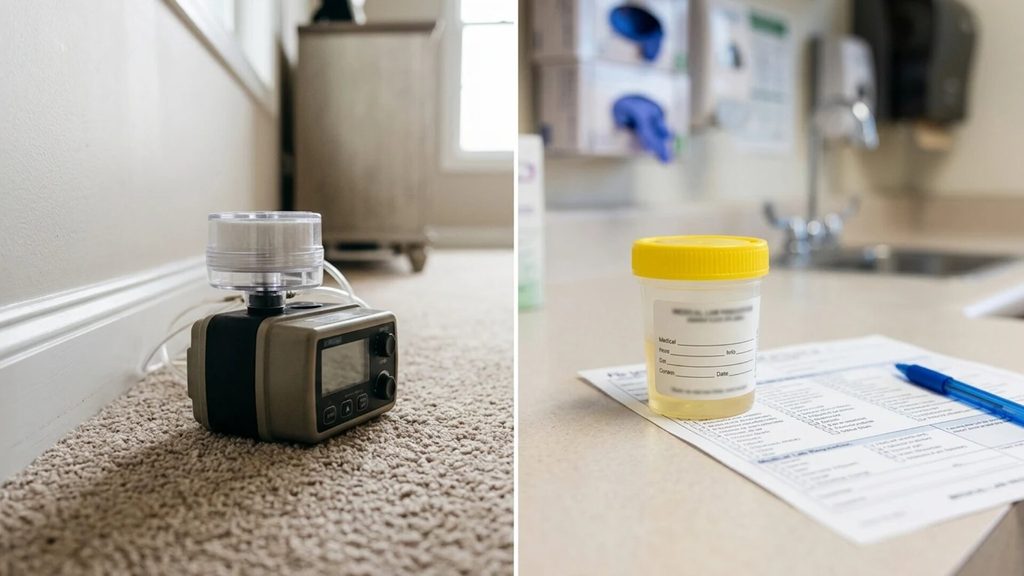
What it cannot tell you is whether your body is carrying a burden from the exposure, or whether your symptoms have anything to do with it. Two people can live in the same house with the same spore counts and only one of them gets sick. Genetics, immune history, gut status and total toxic load all shape that. A number from the air in your hallway does not address any of it.
So the common pattern of running an ERMI, getting a middling result, and then not knowing what to do leaves people stalled for months. The house test was never going to answer the question they actually had.
What we run on the patient side
A urine mycotoxin panel is the centrepiece. It looks for specific mycotoxin metabolites rather than mold itself, which is the distinction that matters, because we care about what your body has processed.
We do not read it alone. We run it alongside inflammatory markers, immune panels and often a GI assessment, because the gut is frequently part of why one person clears exposure and another does not. We also look at genetic markers where it is relevant to how you detoxify.
Context matters enormously with these panels. A result in isolation invites both overtreatment and dismissal, which is why we read it against your history, your timeline and the rest of your labs rather than treating a number as a verdict. That full picture is the work of the complex care side of the practice.
What Treatment Actually Looks Like, and Why Order Matters
I want to set expectations honestly here, because this is not a quick category.
Drainage before binding
Before you start pulling mycotoxins out, the routes they leave by need to be working. Kidneys, liver, bile flow, bowel, lymph. Push a mobilising agent into a system that cannot clear it and you feel significantly worse, and most people interpret that as the protocol being wrong rather than the sequence being wrong.
So the early weeks often look unglamorous. Hydration, bowel regularity, bile support, sleep, the basics done properly. People who have been sick for years sometimes find this frustrating. It is also the step that makes everything after it tolerable.
Then the targeted work
Binders come next, matched to what the panel showed, because different mycotoxins bind to different agents. Alongside that we address the gut, support mitochondrial function and calm the nervous system, which takes a genuine beating during a long illness.

Some patients use additional support from our specialized therapies, including IV therapy and sauna, though sauna in particular belongs later in the sequence rather than at the start. We go at the speed your system tolerates. Sensitive patients sometimes handle one new thing at a time, and that is information, not failure.
The symptom picture that makes us look here
There is no single symptom that says mold. There is a cluster, and once you have seen it a few dozen times it is recognisable.
Fatigue that sleep does not fix is almost always in it. So is cognitive change, the word finding trouble and the sense of thinking through syrup. A lot of patients describe new sensitivity, to smells, to chemicals, to foods they ate happily last year. Air hunger comes up often, that feeling of needing a deeper breath that never quite arrives. Headaches, static or ringing in the ears, unexplained muscle aching, temperature regulation going odd.
What makes it look like mold rather than something else is the combination plus the timeline plus a plausible exposure. One symptom on its own means very little. Five of them starting three months after your ceiling got wet means quite a lot.
The other clue is the family pattern. Often one person in a household is flattened while everyone else is fine, which is exactly what you would expect given how much individual variation there is in clearing this stuff. That pattern gets used as evidence against mold constantly, when it is closer to evidence for it.
Why previous testing came back normal
Standard bloodwork is not built to find this. A complete blood count and a basic metabolic panel will look unremarkable in most people with a meaningful mycotoxin burden, which is how you end up being told you are fine while feeling anything but.
That is not a failure of the test. It is a question of which test. Nobody expects a chest x ray to find a torn ligament. The panels that are informative here are simply not part of a routine workup, and nobody orders them unless they are already thinking about exposure.
The remediation question
We will say this plainly. If the source is still in your house, treatment is a holding action. You do not have to fix everything before starting care, but the building has to get dealt with for the gains to hold.

In practice that means finding a remediation contractor who works to containment standards rather than one who cuts out the visible patch and repaints. The difference shows up months later, which is unhelpfully long after you have paid. Ask what they do about containment, negative pressure and verification after the work, and treat vague answers as answers.
The Part Nobody Tells You
If you have spent the past few months being told your labs look fine while feeling steadily worse, the most useful thing you can do is stop looking for one test that explains everything.
Mold illness is diagnosed from a pattern: a plausible exposure, a timeline that fits, symptoms that match, and panels read in context. We have seen enough of these in Scottsdale to recognise the shape of it, including the version where the leak happened five months ago and everyone has moved on except your immune system.
Book a 90 minute consultation. Bring what you know about the water event, including photos and any contractor reports, and we will build the testing plan from there. Call 602-345-1605 or schedule your appointment.

